on 5th October 2026
How to Store Your Motorhome Safely Over Winter
4 minute read time
As the main touring season comes to an end, many owners choose to store their motorhome or campervan until spring. Preparing your vehicle correctly can help protect it from cold weather, damp, frost and long periods without use.
From draining the water system to caring for the batteries and tyres, here is how to store your motorhome safely over winter.
Choose a Suitable Storage Location
Whenever possible, store your motorhome in a secure, well-drained location. Avoid parking beneath trees, as falling branches, leaves, sap and bird droppings can damage or stain the exterior.
If you are using a specialist storage facility, check its security arrangements, access times and insurance requirements before leaving your vehicle.
Make sure your motorhome is parked on firm, level ground and that water cannot collect underneath or around it.
Clean the Exterior
Wash your motorhome thoroughly before placing it into storage. Pay particular attention to the roof, wheel arches, gutters and drainage channels, where dirt and leaves can accumulate.
Inspect the bodywork and check the seals around doors, windows and rooflights for signs of damage or deterioration. Addressing small problems before winter can help prevent water ingress and more expensive repairs.
Only use cleaning products designed for motorhomes and campervans, as harsh household products may damage specialist finishes and seals.
Consider a Suitable Motorhome Cover
A breathable motorhome cover can provide additional protection from dirt and poor weather. It must be the correct size, securely fitted and specifically designed for use with a motorhome.
Avoid using a standard plastic tarpaulin. A non-breathable covering can trap moisture and may rub against the bodywork in windy weather.
If your vehicle is stored under a cover, check it regularly to make sure it remains secure and is not causing damage.
Drain the Water System
Water left inside pipes, pumps, taps or tanks can freeze and expand, potentially causing serious damage.
Drain the fresh-water and waste-water tanks completely, along with the water heater and toilet system. Open the taps and leave them in the recommended position to help any remaining water escape.
The exact draining procedure varies between vehicles, so always follow the instructions in your motorhome’s handbook.
Empty and Clean the Interior
Remove food, toiletries and any other items that could freeze, leak or attract pests. Take out bedding, towels and soft furnishings where practical, particularly if your vehicle is stored somewhere prone to damp.
Clean the kitchen, washroom and storage areas thoroughly. Empty and clean the fridge, switch it off and leave the door slightly open to prevent unpleasant smells and mould.
Do not forget to empty, clean and prepare the toilet cassette in accordance with the manufacturer’s instructions.
Prevent Damp and Condensation
Good ventilation is essential when storing a motorhome over winter.
Do not block permanent ventilation points, as these are designed to maintain airflow. Leave internal doors, wardrobes and cupboards open to allow air to circulate throughout the vehicle.
Move cushions and mattresses away from exterior walls or store them somewhere dry. Moisture-absorbing products may also help, but they should be checked and emptied regularly.
Inspect your motorhome throughout winter for signs of damp, condensation or water ingress.
Protect the Batteries
Both the starter battery and leisure battery can lose charge while your vehicle is not being used.
Check that the batteries are in good condition and fully charged before storage. Depending on your vehicle, you may need to disconnect them, remove them or use a suitable maintenance charger.
Battery requirements vary, particularly for vehicles fitted with lithium leisure batteries, solar panels, alarms or tracking devices. Follow the guidance provided by the battery and vehicle manufacturers.
Take Care of the Tyres
Check the tyre pressures before storing your motorhome and inspect each tyre for cracks, bulges or damage.
Long periods in the same position can place additional pressure on one section of each tyre. If it is safe and practical, move the vehicle periodically so it is not continuously resting on exactly the same points.
Tyre covers can help protect tyres from prolonged exposure to sunlight. Always check the pressures and condition again before returning the vehicle to the road.
Check Fuel and Fluids
Check the levels and condition of essential fluids, including engine oil, coolant and screenwash. Make sure any products used are suitable for colder temperatures.
The correct approach to fuel storage can vary depending on the vehicle and how long it will be left unused. Consult your owner’s handbook or speak to a qualified technician for advice relating to your particular motorhome.
Consider Gas Safety
Turn off gas cylinders before storing your motorhome and check that appliances have been switched off correctly.
Storage-site rules for gas cylinders may vary, so confirm whether cylinders can remain inside the vehicle. If they are removed, store them safely and in accordance with the supplier’s guidance.
If you have any concerns about the gas system or appliances, arrange a professional inspection.
Improve Your Vehicle’s Security
Even when stored at home or at a secure facility, it is sensible to use additional security measures.
Depending on your motorhome, these could include:
- Steering-wheel locks
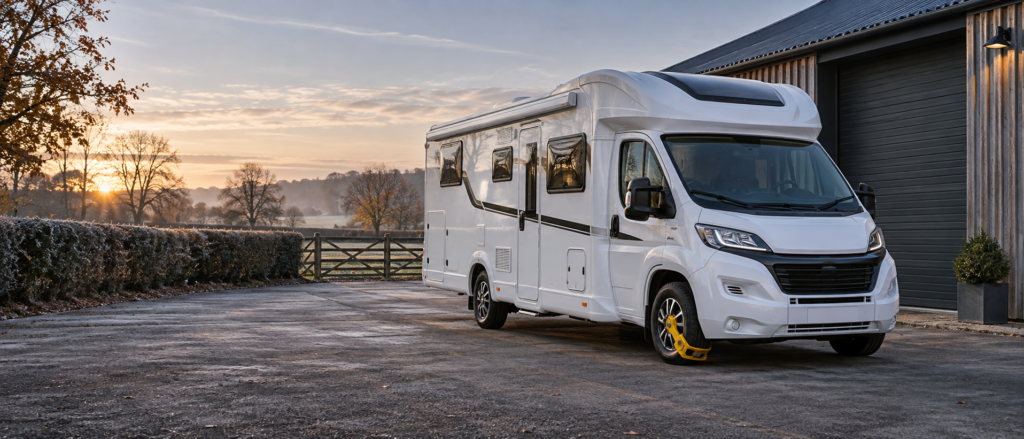
- Wheel clamps
- Secure door locks
- Alarms
- Tracking systems
- Security lighting or cameras
Remove valuables and avoid leaving personal documents or spare keys inside the vehicle. You should also notify your insurer if your storage arrangements change.
Inspect Your Motorhome Regularly
Do not leave your motorhome completely unattended throughout winter. Visit it regularly and check for:
- Damp or condensation
- Water leaks
- Pest activity
- Battery condition
- Tyre pressure
- Damage to the exterior
- Problems with covers or security equipment
Regular checks give you the best chance of spotting a small problem before it becomes more serious.
Prepare for Your Next Adventure
When you are ready to use your motorhome again, carry out a complete inspection before setting off.
Reconnect and charge the batteries, refill and flush the water system, check the tyres and test the lights, heating and appliances. Make sure servicing, habitation checks and MOT requirements are up to date.
Winter Motorhome Support from AEG Motorhomes
Preparing your motorhome properly can help protect your investment and make returning to the road easier when the new touring season begins.
The experienced aftercare team at AEG Motorhomes in Stourbridge can assist with servicing, repairs, damp checks, heating systems, accessories and other workshop requirements.
Contact us on 01384 848438 or submit an online enquiry to discuss the work your motorhome or campervan needs.